
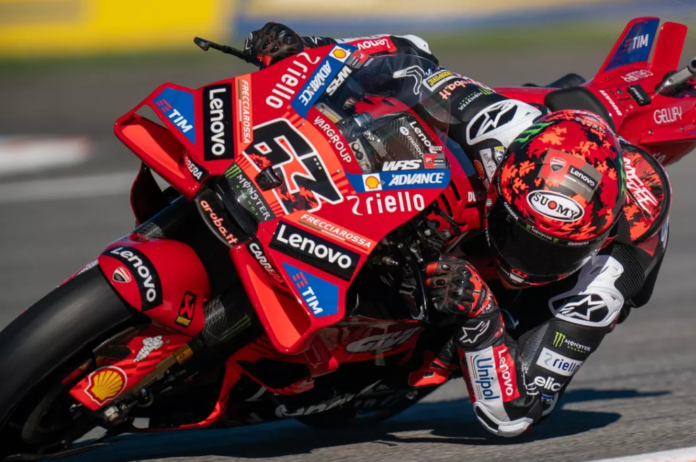
Fabio Di Giannantonio believes the current MotoGP calendar is pushing riders to their limits, highlighting the physical strain of the sport’s expanded schedule.
The 2025 season featured a record 22 grands prix, including a new race in Hungary and the return of events in the Czech Republic and Argentina. With sprint races now a fixture at every weekend since 2023, riders contested 44 races in total—a sharp increase from the fewer-than-20 races typical in previous seasons.
The championship saw dramatic moments, including Marc Marquez’s early title win in Japan and his subsequent crash in Indonesia, which added further challenges to the season’s momentum and culminated in a relatively low-key finale.
Speaking in Valencia, Di Giannantonio said:
“Too many [races]. Too many travelling days, too many for the body. 44 races—too many. Zero training. You train a lot in one month, let’s say in January, and then you just try to keep your form as best as you can through the season. It’s normal that your physical form goes down a little. But it’s what we are paid for, so we have to make it.”
LCR rider Johann Zarco shared similar concerns, noting the mental and physical strain of competing immediately before the Valencia test after the season finale.
“We can feel that weight of the 22 races. The body is kind of struggling. We will need more rest over the winter to come back with better energy. Sometimes we reach the weekend with 70% or 80% of our energy, not 100%. But you have to stay focused, because missing focus on Tuesday can be dangerous. You always need to feel good mentally and physically to ride safely.”
Marco Bezzecchi, Di Giannantonio’s former teammate, acknowledged the physical demands of 22 rounds but emphasized that a rider’s mood and results heavily influence how the schedule feels. He ended the season strongly with wins in Portimao and Valencia aboard the improved Aprilia RS-GP.
“It depends a lot on the mood. If you are doing well, time flies. 22 races with the motorbike, 44 including sprints—it’s tough physically and mentally. But if you build a good relationship with your team and feel good at the races, then you’re doing what you love, so it’s okay.”
The calendar expansion aligns with MotoGP’s push into new Asian markets, following a strategy similar to Formula 1.
Francesco Bagnaia of Ducati welcomed the championship’s growth outside Europe but admitted he would have preferred a shorter season.
“We are prepared for everything, and it’s fair to have a calendar like this. Riding more races outside Europe is enjoyable, though physically it can be tough. Last year I needed one more race, this season maybe five less. But it’s what it is.”
Pedro Acosta of KTM had a positive view of the expanded calendar but noted the higher stakes for injured riders.
“I think it’s a good number. We spend a lot of time with the team, and more races help maintain flow. The downside is that injuries now carry bigger consequences—you might miss four races instead of just one or two. Like Marco said, it depends on your mood. The only negative is if you get injured.”
The 2025 season underscores the delicate balance riders face between enjoying the sport, managing physical limits, and adapting to an ever-growing race calendar.